Leak Fixes & Storm Repair
Roof Repair
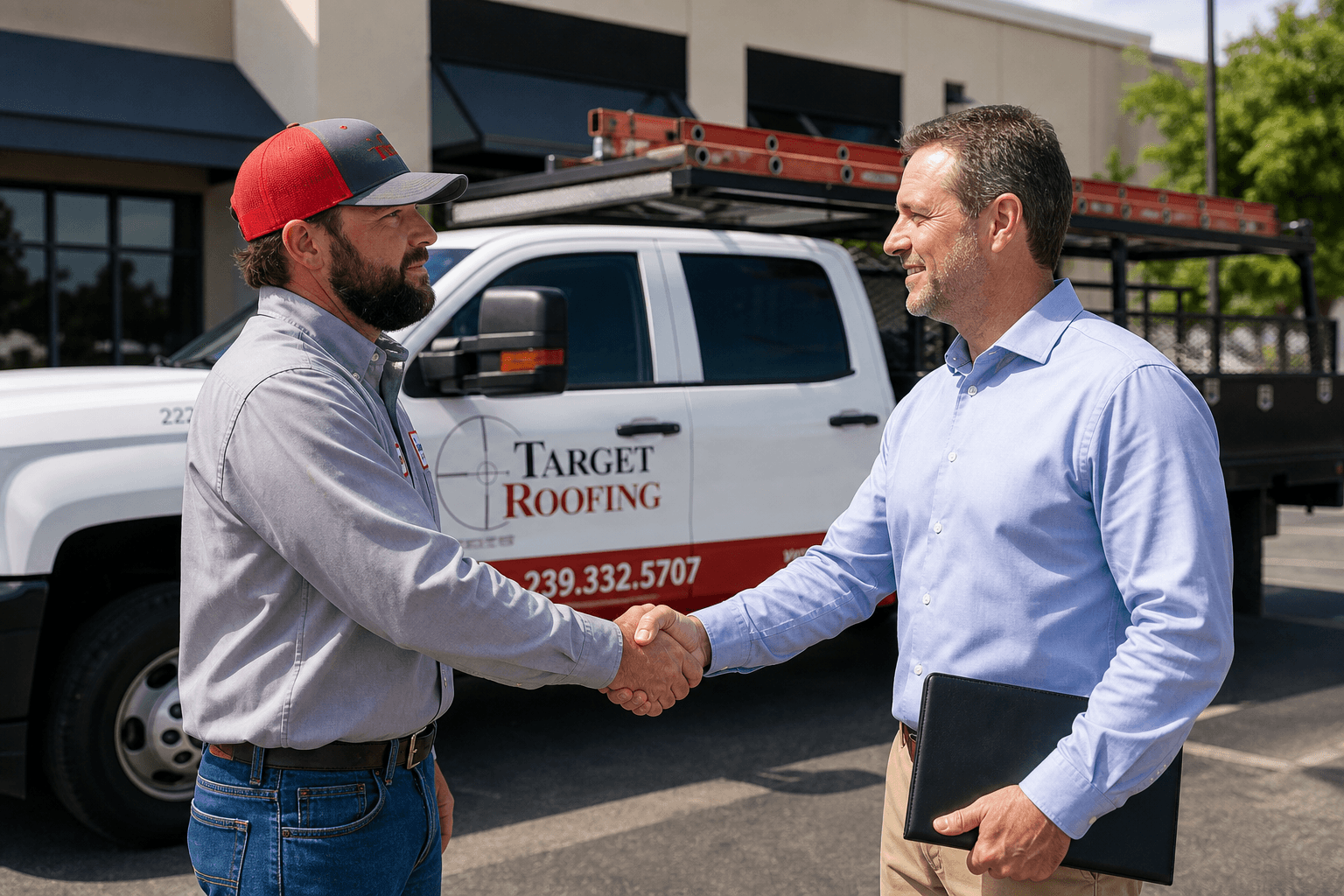
Target Roofing evaluates roof leaks, storm damage and failing flashing across Southwest Florida. Discuss the roof condition, repair scope, current availability and written warranty terms with our team.
We Fix Roofs Before We Sell Them
Most roofing companies want to sell you a new roof on the first visit. We do it backward, on purpose. A repair is the fastest way to stop water from destroying your ceilings, insulation, and drywall - and it is the honest first step for a roof that still has years of life left in it.
When a repair genuinely will not hold, we tell you that too, with photos and a straight explanation of why. That is how a leaky-shingle call in Fort Myers becomes a customer who trusts us with the full re-roof three years later. A repair earns the relationship; the replacement follows when the roof actually needs it, not before.
Target Roofing has repaired roofs across Lee, Collier, Charlotte, Sarasota, and DeSoto counties for more than 30 years. Every technician who climbs your ladder is a direct, background-checked Target Roofing employee in a red polo - never a day-labor subcontractor. We repair asphalt shingle, tile, metal, TPO, PVC, modified bitumen, and built-up roofs, so we can diagnose the leak no matter what is over your head.
Leaks We Repair Every Week
- Cracked pipe boots and failed seals around HVAC curbs
- Wind-lifted or missing shingles after a tropical storm
- Slipped tile that tore the underlayment beneath it
- Split seams and ponding on flat commercial roofs
- Corroded valley metal and backed-out panel fasteners
Finding the Leak Is 90% of the Repair
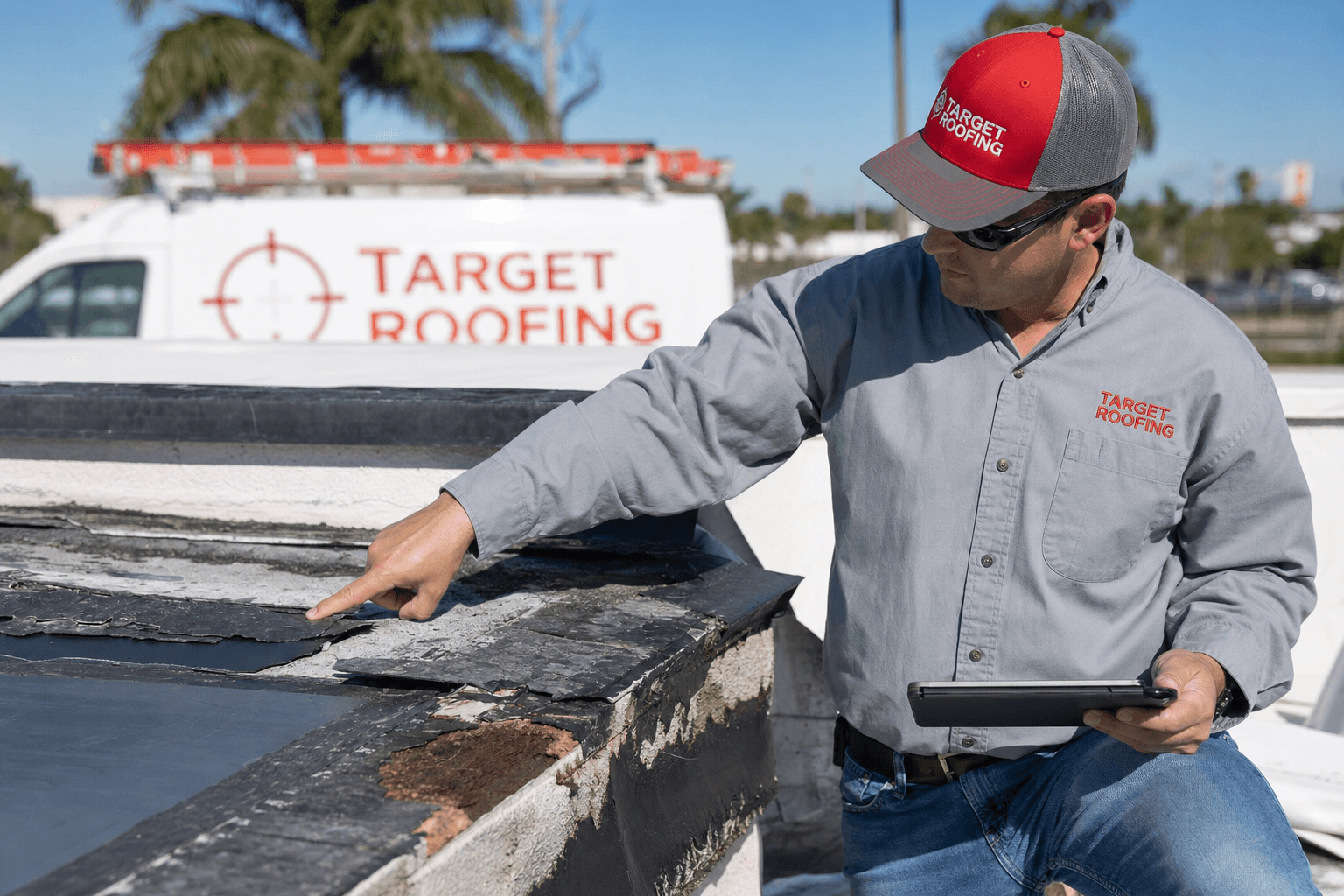
Water rarely enters where it drips. It travels along the underside of the deck, down the rafters, and across the ceiling joists before it finally shows up as a stain three feet from the actual breach. Patch the stain and the roof keeps leaking. Trace it to the source and the repair holds.
Our technicians map interior staining, inspect every flashing, penetration, and fastener on the exterior, and - on flat commercial roofs - run infrared moisture scans that reveal wet insulation invisible from the surface. In Southwest Florida the usual culprits are cracked pipe boots, failed sealant around rooftop equipment, wind-lifted shingles, corroded valley metal, and tile that shifted and tore the underlayment.
Repair for Every Roof We Build
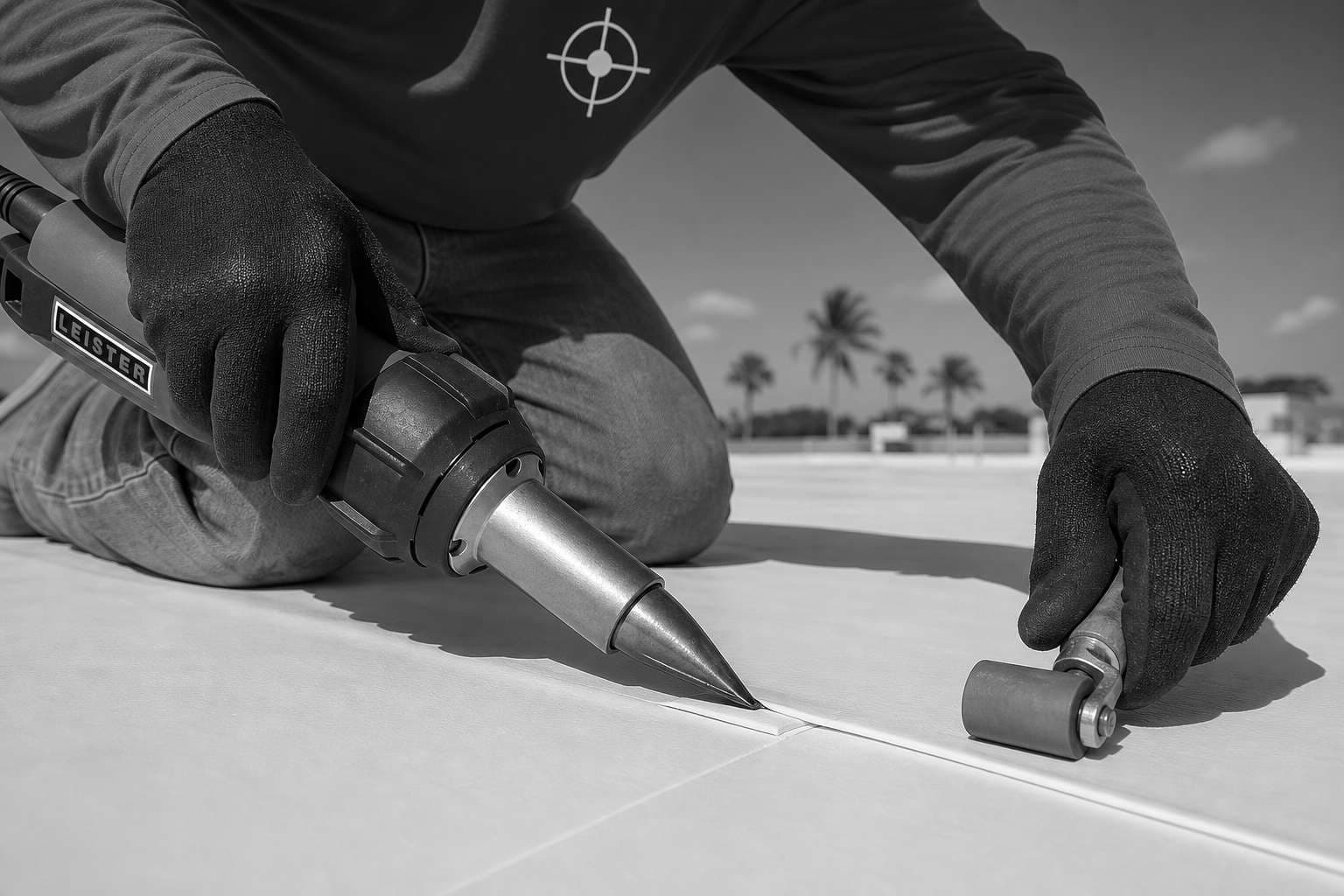
A tile leak and a flat-roof leak fail for completely different reasons. Because we install every one of these systems, we know exactly where each type breaks down and how to make the repair last.
Flat & Membrane Roof Repair
Ponding water, split seams, and punctures around rooftop equipment are the usual failures on low-slope TPO, PVC, and built-up roofs. We heat-weld membrane patches, re-flash penetrations, and re-seal seams so the repair bonds as one continuous surface.
Shingle Roof Repair
Wind-lifted, cracked, or missing shingles let water reach the underlayment. We replace damaged shingles with matching profiles, re-seal exposed nails, and rebuild flashing at walls, valleys, and chimneys where most shingle leaks actually start.
Tile Roof Repair
Cracked or slipped tile can expose the layers beneath it. A repair evaluation checks the tile covering, underlayment, flashing and decking to locate the source of water entry before defining the repair.
Metal Roof Repair
Backed-out fasteners, failed sealant at panel laps, and corroded flashing are the leak points on standing-seam and R-panel roofs. We replace fasteners with oversized gaskets, re-seal laps, and treat rust before it spreads across the panel.
Repair or Replace? Here Is the Real Math.
If your roof is under 15 years old, the leak is isolated, and the deck is sound, a repair is almost always the right call and a fraction of the cost of replacement. There is no reason to buy a new roof to fix a cracked pipe boot.
But if you are patching the same roof every storm season, the underlayment has gone brittle, or more than a third of the field is failing, you are throwing good money after bad - and a re-roof will cost less over five years than a string of repairs. We give you both numbers and the photos behind them, then let you decide. No pressure, no scare tactics, no manufactured urgency.
Review the Written Repair Warranty
Ask for the workmanship warranty that applies to your proposed repair. Review its duration, covered work, exclusions and how to request service. Existing manufacturer coverage may also affect the repair method and documentation required.
Commercial & HOA roof leak repair
On an occupied building, the water stain and the roof defect may be in different places. Share the time the leak occurs, rooms affected, recent rooftop work and earlier repair records. The evaluation should consider drains, seams, penetrations, equipment curbs and transitions between roof areas.
In Target Roofing's roof repair process demonstration, the team follows the interior stain into the attic, checks for deteriorated wood and applies water to a suspected roof area while a second technician watches inside. This pinpoints the water-entry location before defining a targeted repair. Access and testing depend on the property and roof assembly. The repair method depends on the existing assembly and its condition. A TPO or PVC membrane, built-up roof, metal roof or tile system needs a compatible detail. Repeatedly applying a general coating or sealant without finding the source can leave the underlying problem unresolved.
For an HOA, condominium or operating business, identify the authorized contact, safe access, tenant notices and any areas that need protection. Separate immediate stabilization from the written scope for permanent work.
Choose the next step from the findings
- An isolated defect may need a targeted repair.
- Recurring water entry or deterioration across the assembly needs a broader condition review.
- A maintenance plan can organize inspections and documented follow-up after the repair.
- Compare replacement when the repair scope or remaining condition no longer supports a practical repair.
Roof Repair Questions, Answered Straight
How do you find a roof leak when the stain is nowhere near the roof damage?
Water travels along the deck and framing before it shows up inside, so the stain is rarely directly under the breach. We trace it back to the source using interior stain mapping, a close exterior inspection of flashing and penetrations, and infrared moisture scanning on flat roofs. We repair the cause, not the symptom.
Should I repair my roof or replace it?
If the roof is relatively young, the leak is isolated, and the deck is sound, a repair is the smart, affordable choice. If you are repairing it every storm season or a large share of the roof is failing, a replacement usually costs less over time. We show you both numbers with photos and let you decide - no pressure.
What should I do about an active roof leak or storm damage?
For an active leak or storm damage, call 239-332-5707 to discuss the condition of the property and current availability. Emergency stabilization and permanent repair are different steps; access, weather and the extent of damage affect the response.
Will insurance cover my roof repair?
Storm and sudden accidental damage are frequently covered, while normal wear and age are not. We document the damage with dated photos, provide an itemized scope of work, and coordinate directly with your adjuster so the claim reflects everything the storm actually did to your roof.
Do you warranty your roof repairs?
Ask for the written workmanship warranty that applies to your proposed repair, including its duration, scope and exclusions. Manufacturer warranty requirements may also affect how an existing roof can be repaired.
What does a roof repair cost in Southwest Florida?
It depends on the roof type, the source of the leak, and roof access, but most residential repairs are a small fraction of a full replacement. We provide a free repair survey and an itemized, no-obligation estimate before any work begins.
Roof Repair by City
We dispatch local repair crews across Southwest Florida. Find roof repair details and code specifics for your community below.

Request a Free Repair Survey
Tell us where the roof is leaking and our team will trace the source, document the damage, and send an itemized repair estimate. For active leaks, call 239-332-5707 directly.